

- By Admin
- Jiangsu Xintu Machinery Co.,Ltd
-
 Construct Ion
-
 0 Comments
- Industry News
- 530
Pretreatment process of powder coating machine
During powder coating, a masking product is applied to […]
During powder coating, a masking product is applied to a substrate. These products allow for easy coating removal while also preventing contamination. These masking products can also be removed by a burn-off process.
Substrate pretreatment
Selecting the correct pretreatment process is critical to obtaining high quality results from your powder coater. This process is the first step in preparing the substrate for coating and ensures proper adhesion of the powder coat to the metal. Pretreatment processes can range from simple cleaning to complex sealing and conditioning. The optimal pretreatment process depends on the substrate type, end use and your individual specifications.
The most important part of the pretreatment process is cleaning. Depending on the type of metal, you may need to remove heavy metals or contaminants that could damage the coating. You may also want to apply a protective coating to ensure corrosion protection. The best pretreatment solution is the one that ensures long-term corrosion resistance.
The most effective pretreatment process will consist of a series of steps that prepare the substrate for powder coating application. The first step is to remove the top soil. This can be done with hot water or a pressure washer. You may need to use abrasive media to remove deeper layers of dirt.
The next step is rinsing to keep the pH at a constant level. This is a necessary step because moisture can penetrate the solid cured film, causing corrosion.
Application of Thick Coatings on Thin Films
Various techniques are used to apply thick coatings to thin films. Some are traditional and some are new. This article aims to highlight some of these processes.
One of the oldest and most commonly used thin film deposition techniques is chemical vapor deposition (CVD). The CVD process has many industrial applications, including the coating of complex 3D shapes. These processes also offer high productivity and a wide range of advanced coatings.
Another popular thin film deposition process is plasma assisted chemical vapor deposition (PCVD). PCVD is used to deposit thin films. Typically, particles are injected into a high-pressure, low-temperature gas stream. This process can deposit films ranging in thickness from 8 to 125 mils.
Another emerging process is Suspension Plasma Spraying (SPS). SPS uses nanoparticles to deposit thin films. SPS typically produces coatings with multiscale porosity. Typically, SPS coatings have a porosity between 10% and 30%. These coatings could enhance the biocompatibility of medical prostheses.
Chemical pretreatment is another technique used to improve the bond between powder and metal. Typically, pretreatment includes degreasing and etching. These processes improve the bond between powder and substrate.
Thermoset powder coatings are used in a variety of applications. These coatings are created by reacting powder polymers with various chemical groups in the powder. These coatings have good corrosion resistance and are very durable.
Remove impurities
Using a powder coating machine can help you remove impurities from your product. It can also help protect your products from the elements. Also, good pretreatment can prevent flash rust. It will also help your powder coat adhere to the metal.
There are several different ways to perform this task. Each of these methods has its own performance characteristics and specifications. It is important to choose the best method for your application.
The most effective way to remove impurities from a product is to clean it first. Chemical cleaning, pressure washing, and even solvent wiping are all good ways to remove surface dirt and oxidation products. It is important to note that these methods will not completely clean the metal.
Some products present additional challenges due to their surface texture or cut surfaces. These may include milled or welded surfaces. These items may also contain dirt and scale, requiring an additional pretreatment stage.
The most effective way to remove impurities with a duster is to sieve the material. Carrying out a thorough screening process will ensure that the powder is of the highest quality and can be used in your product without issue.
Also, it is important to store the powder properly to reduce contamination problems. The Powder Coatings Association recommends storing powders at 50-60% relative humidity. This will prevent caking of the powder and extend the shelf life of the product.
recycling system
Using a recycling system for your powder coater can help you get the most out of your paint. However, the efficiency of the system depends on the cooperation of many different components. There are two basic types of powder coating recycling systems. These are the Fixed Collector Module (FCM) and the Removable Collector Module (RCM).
The FCM has a proven design and is the easiest choice for basic powder coating operations. It is ideal for start-ups and job shops.
RCM is a more economical option for serial production. It offers low initial cost and low maintenance cost. RCM is designed to be very flexible. It can handle a wide range of colors, but has some limitations.
Cyclone recovery systems use cyclones to separate air and powder. These systems have existed for many years. They have been improved over the years. However, they can be more expensive and require more maintenance.
Recycling systems for powder coating machines allow you to reuse overspray material. One system can recover up to 40% of the total spray powder. This means that unused coating material can be recycled into new products. This is a better option than processing costs and can help you reduce downtime.
The recovery system works by separating the powder from the overspray. The powder is thrown through the screen and falls into the powder feed hopper. It is then mixed with fresh powder.
Applying masking products to substrates during powder coating operations
During powder coating operations, masking products are often applied to the substrate to protect the covered area from the powder material. They are usually made of plastic film coated with a pressure-sensitive adhesive. They are available in a variety of standard and custom shapes.
Prior to masking, the surface of the part to be coated should be completely free of any excessive pits, scratches or roughness. These factors can affect the quality of the final finish. In addition, deposits on the surface can affect the adhesion of the coating.
After cleaning, the parts can be chemically pretreated. This may involve etching, degreasing or desmearing. This process improves the bonding of the powder to the metal and helps the coating to adhere properly.
After the pretreatment process is complete, the parts are placed in a large, high-temperature oven. This step can take up to four hours to complete. It is important to note that the exact temperature will depend on the thickness of the part and the type of powder coating applied.
In the curing phase, the parts are cured at 200 degrees Celsius for at least fifteen minutes. Then pack the parts. Powder coatings can be applied to both metallic and non-metallic substrates.
Masking products can also be used to protect areas not covered by coating. For example, threaded holes in metal parts may need to be masked. This will prevent overspray from reaching critical geometric areas.
Powder coating removal by burn off process
Depending on your needs, there are a few different ways to remove powder coating from your product. These methods can vary in cost, speed, and security. Using the correct technique will help you remove the coating from your product faster and more efficiently.
The best powder coating removal process is one that is fast, efficient and environmentally friendly. The best processes also reduce waste, reuse waste and recycle products. Using a heat removal system can help you achieve this.
There are several different types of heating systems designed for powder coating removal. Each has its own advantages and disadvantages. Some heating systems are capable of removing large amounts of coating faster than others.
Thermal stripping is one of the fastest and cheapest ways to remove powder coating from a product. However, it does require high temperatures and an expensive power supply. Additionally, it can alter the shape of the underlying metal and cause damage to the part.
Burning off is another method of removing powder coating from parts. It involves heating a heating medium on the part and destroying the coating. It is commonly used in production facilities. However, it can also be used for smaller jobs.
Fluidized bed systems are another option for removing powder coatings from equipment. This technique uses a combination of heat and abrasive techniques to remove the coating.
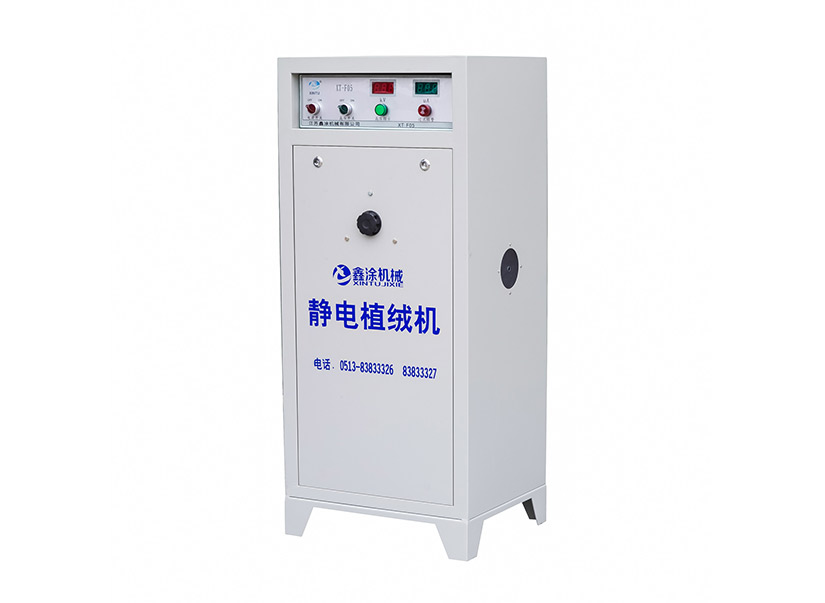
POWERFUL ELECTROSTATIC GENERATOR FOR FLOCKING EQUIPMENT XT-F05
Features:
The machine has high output voltage, high power and high flocking fiber density.
Application:
Mainly used in large automatic flocking production line (cloth, paper, automotive rear baffle ),It can also be equipped with a large flocking box.